Laws, landmark cases, the 2026 deepfake rules and a step-by-step protection plan
A video of a famous actor selling a skin cream he has never used. A cloned voice of a playback singer on an app that charges ₹99 to make “your own song in his voice”. A fake WhatsApp clip of a senior doctor recommending a miracle pill. None of these people agreed to any of it, and all of it is now happening every week in India.
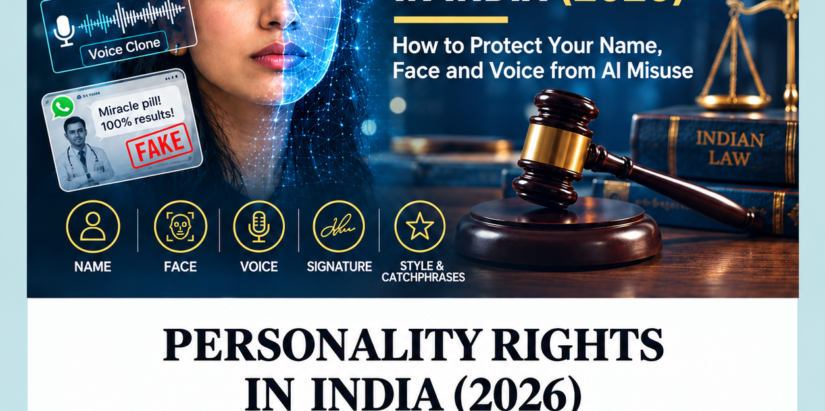
This is exactly the problem personality rights in India exist to solve. They give a person control over the commercial use of their name, face, voice, signature style and catchphrases. Until a few years ago this was a niche topic for film stars and their lawyers. After a wave of AI deepfake orders from the Delhi and Bombay High Courts, it has become a practical question for founders, doctors, creators, sportspersons and any brand that works with a public face.
This guide explains what personality rights are, which Indian laws protect them even though no single statute exists, what the courts decided from 2003 to 2026, how the new IT Rules on deepfakes change enforcement, and the exact steps to protect yourself or your business.
| QUICK ANSWER
Personality rights in India are the legal rights of a person to control the commercial use of their identity: name, image, likeness, voice, signature and distinctive mannerisms. India has no dedicated statute, so courts protect them through the right to privacy under Article 21, the law of passing off, the Trade Marks Act, 1999 and the Copyright Act, 1957. Since 2023, High Courts have regularly granted injunctions against AI deepfakes and voice clones, and the IT Amendment Rules, 2026 now require platforms to label synthetic media and remove unlawful content within 3 hours. |
| KEY TAKEAWAYS
• Personality rights protect your identity (name, face, voice, style, catchphrases) from unauthorised commercial use. • There is no single personality rights law in India. Protection comes from Article 21, passing off, trademark law, copyright law and the IT Rules. • Courts now treat AI deepfakes, voice cloning apps and chatbot impersonation as clear infringement, and grant fast ex parte and John Doe injunctions. • Protection is not limited to film stars. Entrepreneurs like Aman Gupta and doctors like Dr Naresh Trehan and Dr Devi Prasad Shetty have won orders. • Personality rights belong only to living natural persons. Companies cannot claim them, and the Delhi High Court has held they are not inherited after death. • News reporting, parody, satire, biography and use of public facts are generally allowed; commercial exploitation is not. • The strongest protection combines registered trademarks, a monitoring system, clean evidence and quick legal action. |
Table of Contents
- What Are Personality Rights?
Which attributes can be protected?
- Is There a Law for Personality Rights in India?
- Landmark Personality Rights Cases in India (2003 to 2026)
What changed after 2023?
- How AI and Deepfakes Changed Personality Rights
The IT Amendment Rules, 2026 and deepfakes
- Do Personality Rights Apply Only to Celebrities?
- What Counts as Infringement and What Does Not
- Can Personality Rights Be Inherited or Owned by a Company?
- How to Protect Your Personality Rights in India: Step by Step
Step 1: List your identity assets
Step 2: Register the parts that can be trademarks
Step 3: Secure copyright in your content
Step 4: Set up monitoring
Step 5: Control licences with written contracts
Step 6: Collect evidence the right way
Step 7: Enforce in the right order
- What Remedies Can Courts Grant?
- Personality Rights for Brands: Avoiding a Lawsuit
- Personality Rights vs Trademark vs Copyright
- Common Mistakes People Make
- Frequently Asked Questions
- Summary
- Action Steps
- Final Word
What Are Personality Rights?
Personality rights are the rights a living person has over the commercial value of their own identity. If people recognise you by your face, voice, name, style of speaking or a phrase you are known for, that recognition has value. Personality rights let you decide who can use it, for what, and on what terms.
Lawyers usually split them into two parts. The right of privacy protects you from unwanted intrusion and from your identity being shown in a way you did not agree to. The right of publicity protects the money value of your identity, so nobody can sell products or services by borrowing your fame without permission.
Two sides of personality rights
| Aspect | Right of privacy | Right of publicity |
| What it protects | Dignity, private life, being left alone | Commercial value of identity |
| Who needs it most | Everyone | People with recognisable public identity |
| Typical violation | Morphed photos, private data leaks, explicit deepfakes | Fake endorsements, merchandise, AI voice apps |
| Legal root in India | Article 21 of the Constitution | Passing off, trademark law, court decisions |
| Main remedy | Takedown, injunction, criminal complaint | Injunction, damages, account of profits |
Which attributes can be protected?
Indian courts have protected a wide list of attributes, and the list keeps growing with each case:
- Name and nicknames, including initials used publicly
- Image, photograph and likeness, including caricatures and look-alike avatars
- Voice, including AI-generated imitations
- Signature and autograph
- Catchphrases and dialogues, such as Anil Kapoor’s “jhakaas” and Jackie Shroff’s “bhidu”
- Gestures, mannerisms and dance moves, such as the signature step protected in the Allu Arjun order of April 2026
- Persona as a whole, meaning the overall impression that points to one person
| EXAMPLE: DAILY-LIFE EXAMPLE
Think of a local sweet shop that puts a cricketer’s photo on its banner with the line “his favourite laddoo”. Customers believe there is a tie-up. There is none. That borrowed trust is what personality rights stop. |
| EXAMPLE: BUSINESS EXAMPLE
A D2C supplement brand runs Instagram ads using an AI video of a well-known fitness influencer praising its protein powder. Even if the video is labelled “AI”, using her face and voice to sell a product without a licence is commercial exploitation of her persona. |
| EXAMPLE: INDUSTRY EXAMPLE
In May 2026 the Delhi High Court protected boAt co-founder Aman Gupta against fake speaker-booking listings, AI chatbot impersonation, sexually explicit deepfakes and unauthorised use of his phrases “Hum Bhi Bana Lenge” and “DOWN, BUT NOT OUT!”. This showed that business personalities, not only actors, hold enforceable personality rights. |
Is There a Law for Personality Rights in India?
No. India has no single Act called the Personality Rights Act. Courts build protection by combining the Constitution, common law and several statutes. This patchwork works well in practice, but it means every case depends on how well the facts are framed and proved.
Legal sources that protect personality rights in India
| Legal source | What it covers | When it helps most |
| Article 21, Constitution of India | Right to privacy and dignity, confirmed as a fundamental right in K.S. Puttaswamy v. Union of India (2017) | Morphed, explicit or humiliating content |
| Passing off (common law) | Stops false suggestion of endorsement or connection | Fake ads and endorsements |
| Trade Marks Act, 1999 | Protects a registered name, signature or catchphrase used as a brand | Merchandise, domain names, product names |
| Copyright Act, 1957: Sections 38, 38A, 38B and 57 | Performers’ rights, moral rights and author’s special rights | Songs, performances, iconic dialogue delivery |
| Information Technology Act, 2000 and IT Rules | Platform duties, takedown timelines, offences such as cheating by personation (Section 66D) and privacy violation (Section 66E) | Removing content fast, identifying uploaders |
| Digital Personal Data Protection Act, 2023 | Processing of personal data only with a lawful basis | Use of your photos or voice data to train or run tools |
Brainiac has written in detail on why this patchwork is not enough in its analysis of personality rights and the Indian legal framework. Until Parliament acts, court orders are doing the heavy lifting.
| NOTE
Because protection comes from several laws at once, a single legal notice or suit usually pleads more than one ground, for example passing off plus trademark infringement plus violation of privacy. A claim built on only one ground is easier to defend against. |
Landmark Personality Rights Cases in India (2003 to 2026)
Indian personality rights law is almost entirely judge-made. The quickest way to understand it is to see how the cases built on each other, from early disputes over merchandise to 2026 orders against voice-cloning apps.
Key personality rights decisions in India
| Year | Case | Court | What it established |
| 1994 | R. Rajagopal v. State of Tamil Nadu | Supreme Court | Privacy includes control over publication of one’s life story |
| 2003 | ICC Development v. Arvee Enterprises | Delhi HC | Publicity rights belong to individuals, not to events or organisers |
| 2010 | D.M. Entertainment v. Baby Gift House (Daler Mehndi) | Delhi HC | Selling look-alike dolls of a singer is unauthorised use of persona |
| 2012 | Titan Industries v. Ramkumar Jewellers | Delhi HC | Using Amitabh and Jaya Bachchan’s ad images without licence infringes publicity rights |
| 2015 | Shivaji Rao Gaikwad (Rajinikanth) v. Varsha Productions | Madras HC | A film title using a star’s name can be restrained |
| 2017 | K.S. Puttaswamy v. Union of India | Supreme Court | Privacy is a fundamental right under Article 21 |
| 2022 | Amitabh Bachchan v. Rajat Nagi | Delhi HC | Broad “omnibus” injunction covering name, voice, image and the KBC set |
| 2023 | Anil Kapoor v. Simply Life India | Delhi HC | First major order naming AI, deepfakes and GIFs; “jhakaas” protected |
| 2023 | Digital Collectibles v. Galactus Funware | Delhi HC | Use of cricketers’ names and public stats in fantasy games is allowed |
| 2023 | Krishna Kishore Singh v. Sarla A. Saraogi | Delhi HC | Personality rights of Sushant Singh Rajput were not heritable |
| 2024 | Arijit Singh v. Codible Ventures | Bombay HC | AI voice cloning of a singer restrained across physical, digital and metaverse spaces |
| 2024 | Jackie Shroff v. The Peppy Store | Delhi HC | Catchphrase “bhidu” and persona protected |
| 2024 and 2025 | Dr Devi Prasad Shetty; Dr Naresh Trehan | Delhi HC | Doctors protected against deepfake health endorsements; takedowns ordered |
| 2025 | Aishwarya Rai Bachchan v. Aishwaryaworld.com | Delhi HC | Protection against AI misuse and fake merchandise |
| Feb 2026 | Jubin Nautiyal | Delhi HC | Ex parte order against AI deepfakes and voice-based content |
| Apr 2026 | Allu Arjun v. Frankly Retail | Delhi HC | Name, voice, dialogue delivery and signature dance move protected; links to be removed within 72 hours |
| May 2026 | Aman Gupta (boAt co-founder) | Delhi HC | Entrepreneur protected against impersonation, chatbots and explicit deepfakes |
| Jul 2026 | Ravi Kishan | Delhi HC | AI deepfakes and online exploitation restrained |
What changed after 2023?
Two things changed. First, the violations moved from printed posters to AI tools that can produce thousands of fake videos in a day. Second, courts adapted their remedies. Instead of naming one defendant, recent orders often include John Doe defendants (unknown persons) and dynamic injunctions, which let the celebrity notify new infringing links to platforms without filing a fresh case each time.
Courts also began ordering platforms and domain registrars to disclose uploader details and to block specific URLs within fixed hours. In the Allu Arjun order of 17 April 2026, for example, platforms were directed to remove listed links within 72 hours and to act on future notices.
How AI and Deepfakes Changed Personality Rights
A deepfake is audio, video or an image created or altered by AI so that it looks or sounds like a real person saying or doing something they never did. Voice cloning is the audio version: software learns a person’s voice from a few minutes of recordings and then speaks any script in that voice.
These tools made misuse cheap, fast and hard to trace. The court orders from 2023 onward respond to five recurring patterns:
- Fake endorsements: AI videos of stars or doctors promoting products, apps or investment schemes.
- Voice-cloning apps: paid tools that let users generate songs or messages in a celebrity’s voice.
- Chatbot impersonation: AI “talk to [celebrity]” bots that pretend to be the person.
- Explicit deepfakes: sexually explicit morphed content, which courts treat as urgent.
- Merchandise and domains: T-shirts, mugs, posters and websites using a name or face.
The IT Amendment Rules, 2026 and deepfakes
The Ministry of Electronics and Information Technology notified amendments to the IT Rules on 16 February 2026, effective from 20 February 2026. They introduce the term synthetically generated information, meaning audio, visual or audio-visual content created or altered by algorithms so that it appears real and indistinguishable from a real person or event. Text-only content and routine editing are excluded.
Key timelines under the IT Amendment Rules, 2026
| Obligation | Earlier timeline | New timeline |
| Removal of unlawful content after order or notice | 36 hours | 3 hours |
| Removal of non-consensual intimate imagery, including deepfakes | 24 hours | 2 hours |
| Resolution of general user grievances | 15 days | 7 days |
| Resolution of grievances about unlawful content | 72 hours | 36 hours |
Platforms must also label synthetic visuals prominently and add an audio disclosure at the start of synthetic audio. For a person whose identity is being misused, this means a faster route to removal even before a court case, and a stronger argument in court if a platform ignores a complaint.
| COMMON MISTAKE
Assuming an “AI generated” label makes misuse legal. A label tells viewers the content is synthetic. It does not give anyone the right to use your face or voice to sell something. Courts have restrained labelled AI content that exploited a persona commercially. |
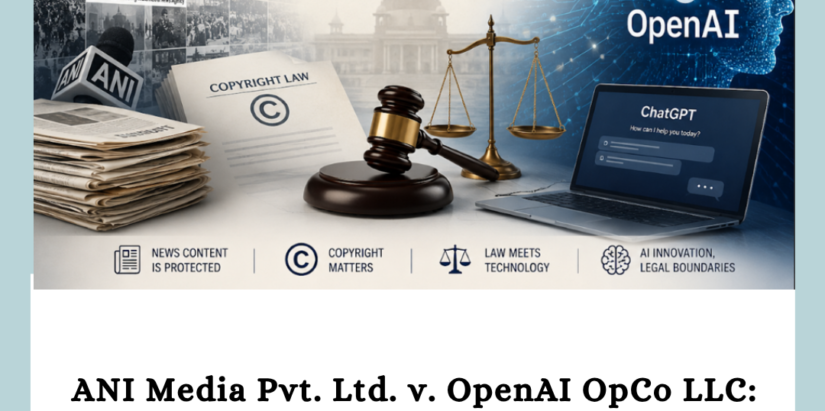
The same questions about AI and ownership are playing out in copyright too. Brainiac’s breakdown of the ANI Media v. OpenAI copyright dispute shows how Indian courts are handling AI training on protected content.
Do Personality Rights Apply Only to Celebrities?
No, but fame matters for the publicity side. The right of privacy under Article 21 protects every person. The right of publicity, which is about commercial value, is strongest for people whose identity is recognisable enough to sell something. Courts ask whether the person has a reputation that a stranger could profit from.
The 2024 to 2026 orders widened who counts as a “personality”. Doctors, entrepreneurs, journalists and politicians have all obtained protection when their identity was used to sell or mislead.
| EXAMPLE: DAILY-LIFE EXAMPLE
A college lecturer finds her photo used on a fake loan app’s ads. She is not a celebrity, so a publicity claim is weak, but her privacy and dignity under Article 21, the IT Rules takedown process and a cyber complaint for personation all apply. |
| EXAMPLE: BUSINESS EXAMPLE
A regional real-estate developer who appears in his company’s TV ads finds a scam page using his face to collect “booking amounts”. His local recognition, plus his registered company marks, gives him a strong case for injunction and takedown. |
| EXAMPLE: INDUSTRY EXAMPLE
In January 2025 the Delhi High Court granted Dr Naresh Trehan a John Doe injunction against deepfake videos showing him giving medical advice under the MEDANTA mark. The videos had passed 1.1 million views. The court directed removal and disclosure of uploader details. |
| PRO TIP
If you are a founder, doctor, coach or creator whose face is part of your business, start treating your identity as a brand asset now. The court asks for evidence of reputation, so keep a file of press coverage, follower numbers, awards and ad campaigns before any dispute arises. |
What Counts as Infringement and What Does Not
Infringement happens when someone uses your identity for commercial gain or in a way that damages your dignity, without consent. Free speech still matters, and courts have been clear that personality rights do not give anyone a veto over news, criticism or art.
Usually infringing vs usually allowed
| Usually infringing | Usually allowed |
| Ads, banners or reels implying endorsement | News reporting and factual commentary |
| AI voice or face clones used in apps or products | Parody and satire that no one mistakes for the real person |
| Merchandise with name, face or catchphrase | Biographies and documentaries based on public facts |
| Chatbots pretending to be the person | Academic analysis and criticism |
| Domain names and social handles impersonating the person | Use of public statistics, as held in the fantasy sports case |
| Explicit or morphed content | Incidental appearance in a crowd or event photo |
The line is not always sharp. A satirical meme page that starts selling T-shirts with a celebrity’s face has moved from speech into commerce. Courts look at the purpose, the likely confusion among the public, and whether money is being made from the identity.
Can Personality Rights Be Inherited or Owned by a Company?
Under current Indian case law, personality rights belong to living natural persons and end with the person. In the case brought by Sushant Singh Rajput’s father, the Delhi High Court held in 2023 that the actor’s publicity rights were not heritable, so the family could not stop a film based on his life on that ground.
Companies cannot claim personality rights either, because the doctrine rests on personhood. A company protects its identity through trademarks, copyright and passing off instead. This is why the ICC in 2003 could not claim publicity rights over the Cricket World Cup event itself.
| NOTE
Families of late public figures still have other tools: defamation, trademarks already registered by the person or estate, copyright in works, and contracts. Planning these during the person’s lifetime makes a big difference. |
How to Protect Your Personality Rights in India: Step by Step
Protection works best as a system, not a reaction. The steps below are the order in which experienced IP teams usually build it.
Step 1: List your identity assets
Write down every element that identifies you: legal name, stage name, nicknames, signature, catchphrases, logo-style autograph, distinctive poses, voice, and social handles. This list becomes the backbone of trademark filings and of any future court plaint.
Step 2: Register the parts that can be trademarks
A registered trademark gives you a statutory right that is easier to enforce than a common law claim. Names, signatures and catchphrases used in trade can be registered in the right classes, for example merchandise, entertainment services or cosmetics. Brainiac’s trademark filing service in India covers class selection and filing, and its article on celebrities and trademarks explains how public figures use this route.
Step 3: Secure copyright in your content
Your photos, videos, songs and performances are copyright works, and performers have separate rights under Sections 38 to 38B of the Copyright Act. Owning or licensing the original content helps when someone uses it to train a clone or edit a deepfake. Brainiac offers copyright registration services for creators and businesses.
Step 4: Set up monitoring
You cannot act on what you cannot see. Set alerts for your name and phrases, check marketplaces and app stores regularly, and track new domain registrations. A structured trademark monitoring service catches look-alike filings early, before they turn into established businesses.
Step 5: Control licences with written contracts
Every endorsement or brand deal should state which attributes are licensed, for which products, in which territories, for how long, and whether AI recreation of your face or voice is allowed. Many older contracts say nothing about AI, which leaves room for dispute.
Step 6: Collect evidence the right way
Evidence checklist before sending a notice
- Full URL, date and time of each infringing post, listing or video
- Screen recordings of videos and audio, not just screenshots
- Views, likes, shares and comments that show reach and public confusion
- Seller names, payment pages and contact details shown on the page
- Proof of your reputation: press, ads, awards, follower counts
- Copies of your trademark certificates and licence agreements
- Complaints already filed with platforms and their replies
Step 7: Enforce in the right order
- Platform complaint under the IT Rules, asking for removal within the new timelines.
- Legal notice to identifiable infringers demanding they stop and account for profits.
- Cyber complaint where there is impersonation, fraud or explicit content.
- Civil suit seeking an injunction, including John Doe and dynamic relief, damages and disclosure of user details. Brainiac’s copyright enforcement support and trademark infringement services handle this stage.
| PRO TIP
Speed decides these cases. Courts grant ex parte relief when the harm is ongoing and the plaintiff acted quickly. A delay of months after discovering the misuse weakens the argument that the injury is urgent and irreparable. |
What Remedies Can Courts Grant?
Indian courts can grant a range of remedies in personality rights cases, and most successful plaintiffs receive several at once:
Common remedies in personality rights suits
| Remedy | What it does |
| Interim or ex parte injunction | Stops the misuse immediately, sometimes before the other side is heard |
| John Doe injunction | Binds unknown infringers, useful against anonymous pages and apps |
| Dynamic injunction | Lets the plaintiff add new infringing URLs without a fresh suit |
| Takedown and blocking directions | Orders platforms, registrars and telecom authorities to remove or block content |
| Disclosure orders | Require platforms to reveal uploader or seller details |
| Damages or account of profits | Compensation for commercial loss or handing over profits made |
| Delivery up | Seizure or destruction of infringing merchandise |
Personality Rights for Brands: Avoiding a Lawsuit
If your business works with influencers, celebrities or AI-generated spokespeople, personality rights are a compliance issue, not just a celebrity issue. One unauthorised reel can lead to an ex parte injunction, a takedown of your whole campaign and a claim for profits.
- Get written consent that names each attribute used, especially voice and AI recreation.
- Never create a “look-alike” or “sound-alike” AI spokesperson based on a real person.
- Check that stock photos and AI avatars do not resemble a recognisable public figure.
- Remove content immediately when a consent period ends.
- Treat personal data such as voice samples carefully under the Digital Personal Data Protection Act.
| EXAMPLE: SCENARIO
A cloud kitchen chain in Pune uses an AI tool to create a reel where a cricketer’s cloned voice says “my favourite biryani”. The reel goes viral. Within days the cricketer’s team files a suit and obtains an order. The chain loses the reel, pays legal costs and faces a claim for profits made during the campaign. A licence fee would have cost far less. |
Personality Rights vs Trademark vs Copyright
These three are often confused. They overlap, and the strongest protection uses all three together.
How the three rights compare
| Point | Personality rights | Trademark | Copyright |
| Protects | Identity: name, face, voice, persona | Brand signs used in trade | Original works and performances |
| Registration needed? | No, court-recognised | Registration gives stronger rights | Automatic; registration helps as evidence |
| Who can hold it | Living natural persons only | Persons and companies | Authors, owners, performers |
| Duration | Lifetime (not heritable, per 2023 ruling) | 10 years, renewable | Lifetime plus 60 years for most works |
| Best against | Deepfakes, fake endorsements, voice clones | Merchandise, domains, look-alike brands | Copying of photos, songs, videos |
For public figures, a well-known trademark status can extend protection across unrelated product classes, which adds another layer beyond personality rights.
Common Mistakes People Make
| COMMON MISTAKE
Waiting for the content to “die down”. Deepfakes spread faster than they fade, and delay weakens the case for urgent relief. |
| COMMON MISTAKE
Relying only on reporting buttons. Platform reporting is a first step. Without a legal notice or court order, repeat uploads often continue. |
| COMMON MISTAKE
Never registering the catchphrase or stage name. A registered mark turns a debatable claim into a clear statutory right. |
| COMMON MISTAKE
Signing endorsement contracts that are silent on AI. Silence invites disputes about whether a brand can recreate your face or voice. |
| COMMON MISTAKE
Collecting only screenshots. Courts and platforms act faster on URLs, recordings and proof of reach. |
Frequently Asked Questions
What are personality rights in India?
Personality rights are a person’s rights to control the commercial use of their identity, including name, image, voice, signature and mannerisms. Indian courts recognise them through Article 21, passing off, trademark and copyright law, even though no dedicated statute exists.
Is there a specific personality rights law in India?
No. There is no standalone Act. Courts combine the constitutional right to privacy, the common law of passing off, the Trade Marks Act, 1999, the Copyright Act, 1957 and the IT Rules to protect a person’s identity.
Who can claim personality rights?
Any living natural person can claim privacy-based protection. Publicity-based protection is strongest for people with a recognisable reputation, such as actors, singers, sportspersons, doctors, entrepreneurs and influencers. Companies cannot claim personality rights.
Do ordinary people have personality rights?
Yes, in the privacy sense. Anyone whose photo or voice is misused, morphed or used in explicit content can seek takedown under the IT Rules, file a cyber complaint and approach court under Article 21. Commercial publicity claims need some public recognition.
Are AI deepfakes illegal in India?
Creating a deepfake is not automatically illegal, but using one to impersonate, defraud, defame, create explicit content or sell products without consent can break several laws. Courts have repeatedly restrained deepfakes that exploit a person’s identity.
What do the IT Amendment Rules, 2026 say about deepfakes?
Notified on 16 February 2026 and effective from 20 February 2026, they define synthetically generated information, require prominent labels on synthetic audio and video, and cut takedown time to 3 hours for unlawful content and 2 hours for non-consensual intimate imagery.
Can my voice be protected in India?
Yes. Courts protected Arijit Singh’s voice against AI cloning in 2024 and later extended similar protection to Jubin Nautiyal and Allu Arjun. Voice is treated as a distinctive personal attribute that cannot be commercially cloned without consent.
Can I trademark my name in India?
Yes, if you use or plan to use it in trade for goods or services. Public figures often register their name, signature or catchphrase in classes such as merchandise, entertainment and cosmetics. Registration makes enforcement much easier.
Can a catchphrase be protected?
Yes. Delhi High Court orders have protected catchphrases such as “jhakaas” for Anil Kapoor and “bhidu” for Jackie Shroff, and in 2026 Aman Gupta’s phrases. Registering the phrase as a trademark adds statutory protection.
Are personality rights inherited after death?
Under current Delhi High Court law, no. In the 2023 case concerning Sushant Singh Rajput, the court held that publicity rights are not heritable. Families can still rely on defamation, registered trademarks, copyright and contracts.
Is parody or satire of a celebrity allowed?
Generally yes. Parody, satire, news reporting, biography and criticism are protected speech, provided the public does not mistake the content for the real person and it is not used mainly to sell products.
How fast can a court stop a deepfake?
Very fast when the harm is clear. Delhi High Court has granted ex parte injunctions on the first hearing and directed platforms to remove listed links within fixed windows, such as 72 hours in the Allu Arjun order and 24 to 36 hours in the Dr Trehan order.
What is a John Doe order in personality rights cases?
A John Doe order is an injunction against unknown defendants. It lets the court restrain anonymous pages, apps and sellers who cannot be identified when the suit is filed, and often comes with directions to platforms to disclose their details.
What is a dynamic injunction?
A dynamic injunction lets the plaintiff notify new infringing URLs or mirror sites to platforms after the original order, without filing a fresh case. It is useful when deepfakes are re-uploaded under new links.
Which court handles most personality rights cases?
The Delhi High Court hears the majority of recent personality rights suits, including those of film stars, singers, doctors and entrepreneurs. The Bombay and Madras High Courts have also passed important orders.
Can a brand use a celebrity look-alike in ads?
It is risky. If viewers are likely to think the real celebrity is involved, courts may treat it as passing off and infringement of publicity rights. The same applies to AI-generated sound-alikes.
Do personality rights apply on social media and the metaverse?
Yes. Recent orders expressly cover websites, social media, AI platforms and the metaverse, so misuse on any digital medium can be restrained.
What evidence do I need to file a personality rights case?
You need proof of your reputation, proof of the misuse with URLs and recordings, proof of commercial gain or harm, and records of complaints already made. Registered trademarks and licence agreements strengthen the case.
What should I do first if a deepfake of me is circulating?
Record every link and the content itself, report it to the platform under the IT Rules, file a cyber complaint if there is fraud or explicit material, and consult an IP lawyer quickly about a notice or an urgent injunction.
Summary
Personality rights in India protect the commercial and personal value of who you are. The law is built from court decisions rather than one statute, yet it has become strong and fast, especially against AI deepfakes and voice clones. The 2026 IT Rules add hard takedown deadlines for platforms. Protection now reaches entrepreneurs and professionals, not only film stars, but it remains limited to living persons and gives way to genuine news, parody and commentary.
Action Steps
- List every element of your identity that people recognise, from name to catchphrase.
- File trademark applications for your name, signature and phrases in relevant classes.
- Register or document ownership of your key photos, videos and recordings.
- Set up monitoring for your name, face and phrases across platforms, marketplaces and domains.
- Add AI and voice-recreation clauses to every endorsement and brand contract.
- Prepare a reputation file with press, awards and audience numbers.
- If misuse appears, collect evidence immediately andbook a consultation to decide between a notice and an urgent injunction.
Final Word
Your identity is now one of the easiest things to copy and one of the hardest things to win back once it spreads. The good news is that personality rights in India have never been stronger in practice. Courts act within days, platforms face hour-based deadlines, and a well-prepared file of trademarks, contracts and evidence turns a messy situation into a clear case. Brainiac explored these questions with industry and legal leaders at its Protecting Human Identity in the Age of AI roundtable in June 2026, and the message was simple: protect your identity before someone else profits from it.
Publishing Notes
For the publishing team. Remove this page before publishing.
Meta title: Personality Rights in India 2026: Law, Cases & AI Deepfakes
Meta description: Learn how personality rights in India protect your name, face and voice from AI deepfakes. Key laws, 2003 to 2026 court cases, IT Rules 2026 and steps to act.
URL slug: personality-rights-in-india
Tags: Personality Rights India, AI Deepfakes, Publicity Rights, Voice Cloning Law, IT Rules 2026
Get In Touch
FAQs
1. What is fan fiction?
Fan fiction is a creative work written by fans using characters, plots, settings, or story elements from existing books, movies, shows, or fictional universes.
2. Is fan fiction always copyright infringement?
Not always. Fan fiction may amount to copyright infringement if it uses copyrighted characters or storylines without permission. However, if the work adds new meaning, expression, or criticism, it may receive protection under fair use or fair dealing principles.
3. Why is fan fiction legally risky?
Fan fiction is legally risky because it often uses copyrighted characters, settings, and story elements that belong to the original creator or copyright owner.
4. What is a derivative work?
A derivative work is a new work based on an existing copyrighted work. Since fan fiction usually builds upon existing stories or characters, it may be treated as a derivative work.
5. Is non-commercial fan fiction legal?
Non-commercial fan fiction is usually tolerated by many copyright owners, but it is not automatically legal. The legality depends on how much copyrighted material is used and whether the work is transformative.
6. Can commercial fan fiction create legal problems?
Yes. Commercial fan fiction carries a higher legal risk because it may compete with the copyright owner’s ability to earn money from the original work.
7. What is fair use?
Fair use is a legal doctrine mainly followed in the United States. It allows limited use of copyrighted material without permission in certain situations, such as criticism, commentary, education, or parody.
8. What is fair dealing under Indian copyright law?
India follows the doctrine of fair dealing under Section 52 of the Copyright Act, 1957. It permits limited use of copyrighted works for specific purposes such as research, private study, criticism, review, news reporting, judicial proceedings, and education.
9. Is fan fiction clearly protected under Indian copyright law?
No. Fan fiction is not specifically mentioned in the Indian Copyright Act. Therefore, its legal position in India remains uncertain and depends on the facts of each case.
10. What is transformative use?
Transformative use means using an existing work in a way that adds new meaning, expression, purpose, or message. Fan fiction that reinterprets characters or presents a new perspective may have a stronger legal argument.