
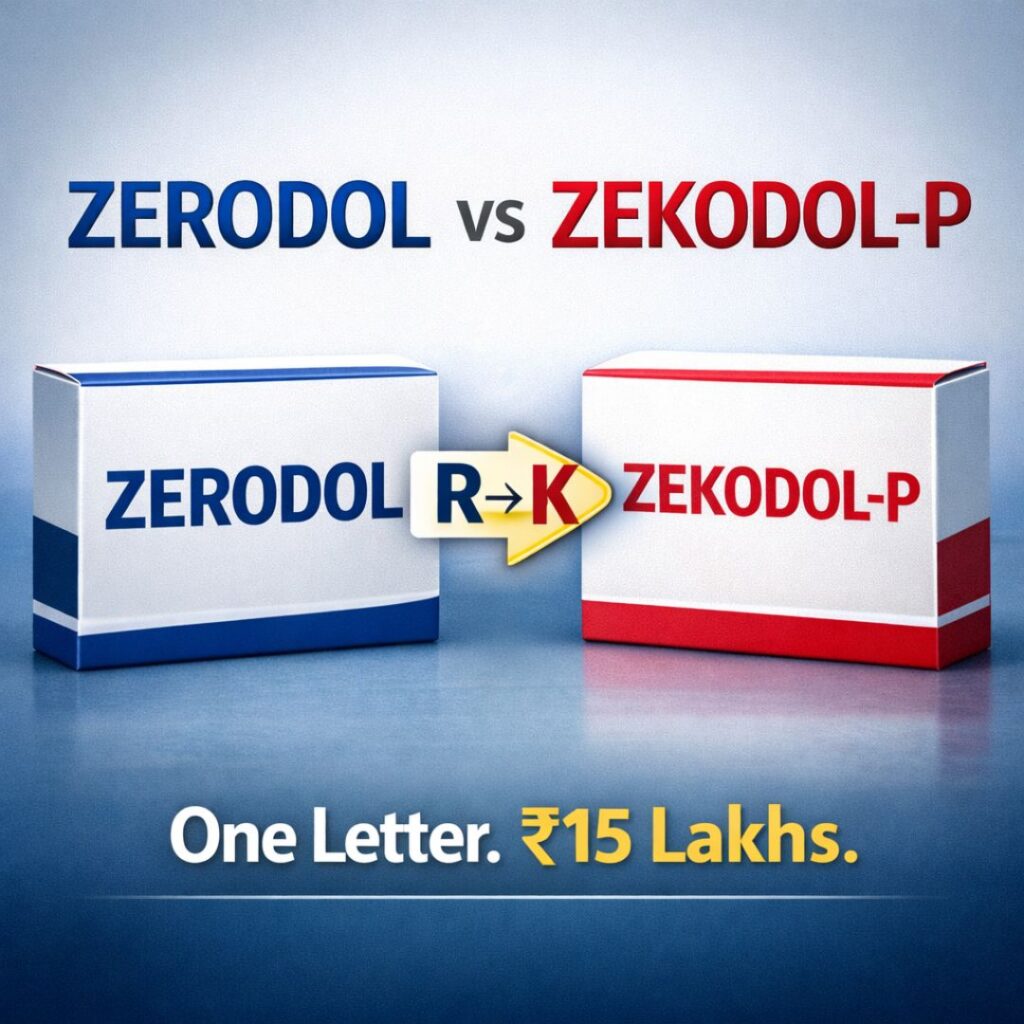
In a recent decision, the Bombay High Court permanently restrained the use of “ZEKODOL-P” in a trademark dispute involving the well-known pain-relief brand “ZERODOL” owned by IPCA Laboratories.
At first glance, the difference between ZERODOL and ZEKODOL-P may appear minor. Just a change of letters. A slight visual tweak. But in the pharmaceutical industry, similarity is not judged casually.
The Court examined phonetic resemblance, visual structure, and the nature of the goods, identical medicinal products. The result? A finding of deceptive similarity, a permanent injunction against the defendant, and costs of ₹15 lakhs.
Why is this significant for pharma companies?
Because in pharmaceutical trademarks, courts apply a far stricter standard. Medicines are not impulse purchases, they are prescribed, dispensed, and consumed in situations where confusion can have serious consequences. Even a small phonetic overlap can create risk in handwritten prescriptions, verbal orders, or rural distribution channels.
The judiciary consistently prioritizes public health over market experimentation.
This case reinforces three commercial realities for pharma businesses:
- First, brand clearance searches are not a formality. A superficial modification to an existing mark does not insulate a company from infringement liability.
- Second, prior adoption and reputation matter. Established pharma brands with strong market presence enjoy robust judicial protection.
- Third, infringement today is not just about stopping sales tomorrow, it is about litigation exposure, damages, reputational impact, and forced rebranding at scale.
For growing pharma companies and generics manufacturers, trademark strategy must move in parallel with regulatory and product strategy. Before investing in packaging, marketing approvals, distribution, and medical representative rollouts, the brand itself must be legally sustainable.In an industry where molecules may be similar, but brands must not be, your trademark portfolio is a competitive asset, and a litigation shield.
If you are launching a new product line or expanding into combination drugs, this is the right time to evaluate your trademark risk exposure and enforcement readiness.
Because in pharma, one alphabet can change everything.
