
Author: Vishruta Kulkarni,
In today’s global market, branded products hold immense value. Consumers often associate a brand with quality, trust and reputation. But along with the rise of trust in branded products, rapid rise in counterfeiting of products has a become a serious challenge for both businesses and consumers. From fake luxury bags and shoes to counterfeit medicines and electronics, the market for imitation goods continues to expand worldwide. Counterfeiting not only affects the economy but also violates IP Laws and endangers public safety.
What are Trademarks?
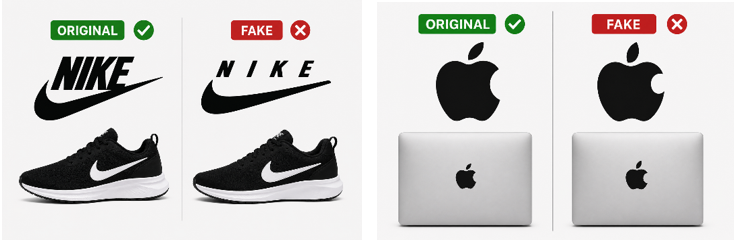
Before jumping to the concept of counterfeiting, let’s understand what trademarks are. A trademark protected under the Trade Marks Act, 1999 is a sign, symbol, logo, word, phrase or combination that distinguishes the goods or services of one business from another. It helps consumers identify the origin of products and ensures that they are purchasing genuine goods from a particular company. For example, logos such as the swoosh of Nike or the bitten apple of Apple instantly help customer recognize the brand. Trademark protection prevents unauthorized persons from using identical or deceptively similar marks for commercial gain. The primary function of a trademark is to indicate the source or origin of goods. It also protects the goodwill and reputation built by businesses over time.
What is Counterfeiting?
Counterfeiting of a product refers to the unauthorized imitation of genuine products with the intention of deceiving consumers into believing that the products are original. Counterfeiters often copy trademarks, packaging, labels, and overall appearance of famous brands to mislead buyers. These fake products are generally sold at lower prices and are designed to closely resemble authentic goods. Counterfeiting is commonly seen in industries such as fashion, cosmetics, pharmaceuticals, electronics, automobile parts and consumer goods.
The courts have consistently treated counterfeiting as a serious form of trademark infringement. In Honda Siel Power Products Ltd. v. Usha International Ltd[1]., the court observed that the unauthorised use of deceptively similar trademark can mislead consumers and unfairly exploit the reputation of established brands.
[1] Honda Siel Power Prods. Ltd. v. Usha Int’l Ltd., 2003 SCC OnLine Del 706 (India)
What led to increase of Counterfeiting?
There are several factors which have contributed to the rise of counterfeiting of products.
Primarily, the growing demand for branded products encourages counterfeiters to create cheaper imitations as many consumers are attracted by low prices. Secondly, the growth of online marketplaces and social media platforms has made it easier to distribute fake products globally. Counterfeit sellers can now reach millions of consumers with minimal investment.
Another major reason is that inadequate monitoring and lack of public awareness allow counterfeit businesses to operate freely in some regions.
Effects of Counterfeiting
1. Harm to Consumers: Counterfeit products are often manufactured using inferior materials and poor production standards which can cause danger to the consumers. For example, fake medicines may contain harmful substances, counterfeit cosmetics may damage skin and electronic products may create safety hazards. Consumers also suffer financially because they pay for products believing them to be genuine.
2. Loss to Businesses: Counterfeiting causes severe economic losses to genuine and legitimate companies. Businesses invest significant time and money into building their brand reputation and maintaining quality standards. Counterfeit products damage this goodwill and reduce consumer trust.
Further, trademark infringement through counterfeit products may also reduce the market value and distinctiveness of famous brands.
3. Impact on the Economy: Counterfeiting of products also affects the national economy negatively by reducing tax revenue, discouraging innovation and increasing illegal trade activities. It may also lead to unemployment because genuine businesses loose profits and market share.
Counterfeiting and Trademark Infringement
Counterfeiting is considered a serious form of trademark infringement. Trademark infringement occurs when an unauthorized person uses a mark that is identical or deceptively similar to a registered trademark in a way that causes confusion among consumers. For example, if a person sells shoes using a logo very similar to Nike’s trademark, consumers may wrongly believe that the shoes are genuine, this is called infringement and counterfeiting.
Under the Trade Marks Act 1999[1], trademark owners can take legal actions against counterfeiters through civil remedies such as injunctions, damages and seizure of counterfeit goods. In the case of Midas Hygiene industries Pvt. Ltd. v. Sudhir Bhatia,[2] the Supreme Court held that injunctions should normally be granted in cases involving trademark infringement to prevent ongoing damage to goodwill and reputation.
Apart from these civil remedies, counterfeiting may also attract criminal liabilities in serious cases, like raids can be conducted, fake products can be confiscated and offenders can be prosecuted.
The legal concept of “passing off” also protects unregistered trademarks by preventing others from misrepresenting their goods as those of another business. In the case of Parle Products Pvt. Ltd. v. J.P. & Co.,[3] the Supreme Court held that if the overall similarity between two products is likely to deceive an ordinary consumer, it may amount to infringement or passing off.
[1] Trade Marks Act 1999.
[2] Midas Hygiene Indus. (P) Ltd. v. Sudhir Bhatia (2004) 3 S.C.C. (90) (India)
[3] Parle Prods. (P) Ltd. v. J.P. & Co., (1972) 1 S.C.C. 618 (India)
Counterfeiting vs. Trademark Infringement
| Basis | Counterfeiting | Trademark Infringement |
|---|---|---|
| Meaning | Unauthorized imitation of a product and its trademark with the intention to deceive consumers into believing the product is genuine. | Unauthorized use of a trademark or a deceptively similar mark that causes confusion among consumers regarding the origin of goods or services. |
| Nature of act | It is a more serious and deliberate form of trademark violation involving fake products. | It may involve unauthorized use of a similar or identical mark without necessarily producing fake replicas. |
| Purpose | Primarily intended to deceive consumers and profit from the goodwill of established brands. | Usually involves unauthorized commercial use that infringes trademark rights. It doesn’t matter if it is intentional or not. |
| Use Of Trademark |
Uses an identical or nearly identical trademark on fake goods. | May use identical or deceptively similar marks that create confusion. |
| Products Involved |
Generally, involves imitation of products or fake products which look like original goods. | Can involve genuine products or services using an unauthorized mark. |
| Consumer Deception |
High level of deception, consumers are made to believe they are buying authentic products. | Consumer confusion may arise regarding association, sponsorship or origin of goods or services. |
| Impact on Consumers |
May pose serious safety and health risks due to poor-quality fake products. | Mainly affects consumer choice and brand confusion. |
| Legal Consequences |
Often attracts stricter civil and criminal penalties because of fraudulent intent. | Usually results in civil remedies such as injunctions, damages or account of profits. |
| Example | Selling fake Nike shoes with the original Nike logo and packaging. | Using a mark like “Niky” for shoes that resembles the Nike trademark. |
How Can Counterfeiting be Prevented
In order to prevent or reduce counterfeiting cooperation between governments, business and consumers in required.
Businesses should actively register and protect their trademarks, monitor the markets and adopt anti-counterfeiting technologies such as QR code verification. Governments must strengthen enforcement mechanisms and impose strict penalties on offenders. Consumers also pay an important role by purchasing products only from authorized sellers and verifying authenticity before buying branded goods.
Conclusion
Counterfeiting is more than just the sale of fake goods, it is a serious violation of intellectual property rights and also harms the consumers, businesses and the economy. Trademarks help protect the identity and reputation of brands, while counterfeiting undermines the trust associated with them. As counterfeit markets continue to grow, stronger legal enforcement, public awareness and responsible consumer behaviour are essential to reduce this problem.
Get In Touch
Frequently Asked Questions
What is counterfeiting of products?
Counterfeiting of products means making or selling fake goods by copying the trademark, packaging, label or appearance of genuine branded products to deceive consumers.
Is counterfeiting a form of trademark infringement?
Yes. Counterfeiting is generally considered a serious form of trademark infringement because counterfeiters use identical or deceptively similar trademarks without authorization.
How does counterfeiting harm businesses?
Counterfeiting damages brand reputation, reduces consumer trust, causes loss of sales and affects the goodwill of genuine businesses.
How can businesses prevent counterfeiting?
Businesses can prevent counterfeiting by registering trademarks, monitoring the market, using anti-counterfeiting technologies and taking timely legal action.
