
IP training for R&D teams.
use patents to build better products.
Brainiac IP Solutions offers two specialized, one-day training programs designed for different professional needs.
Program 1: IP for R&D
For R&D engineers, product developers, and innovation teams who want to understand how intellectual property can support product development, protect innovations, and improve business decisions.
Program 2: Advanced Patent Drafting
For experienced patent drafters and IP professionals who want to strengthen their practical skills in patent claim drafting, prior art analysis, FTO considerations, and AI-assisted drafting.
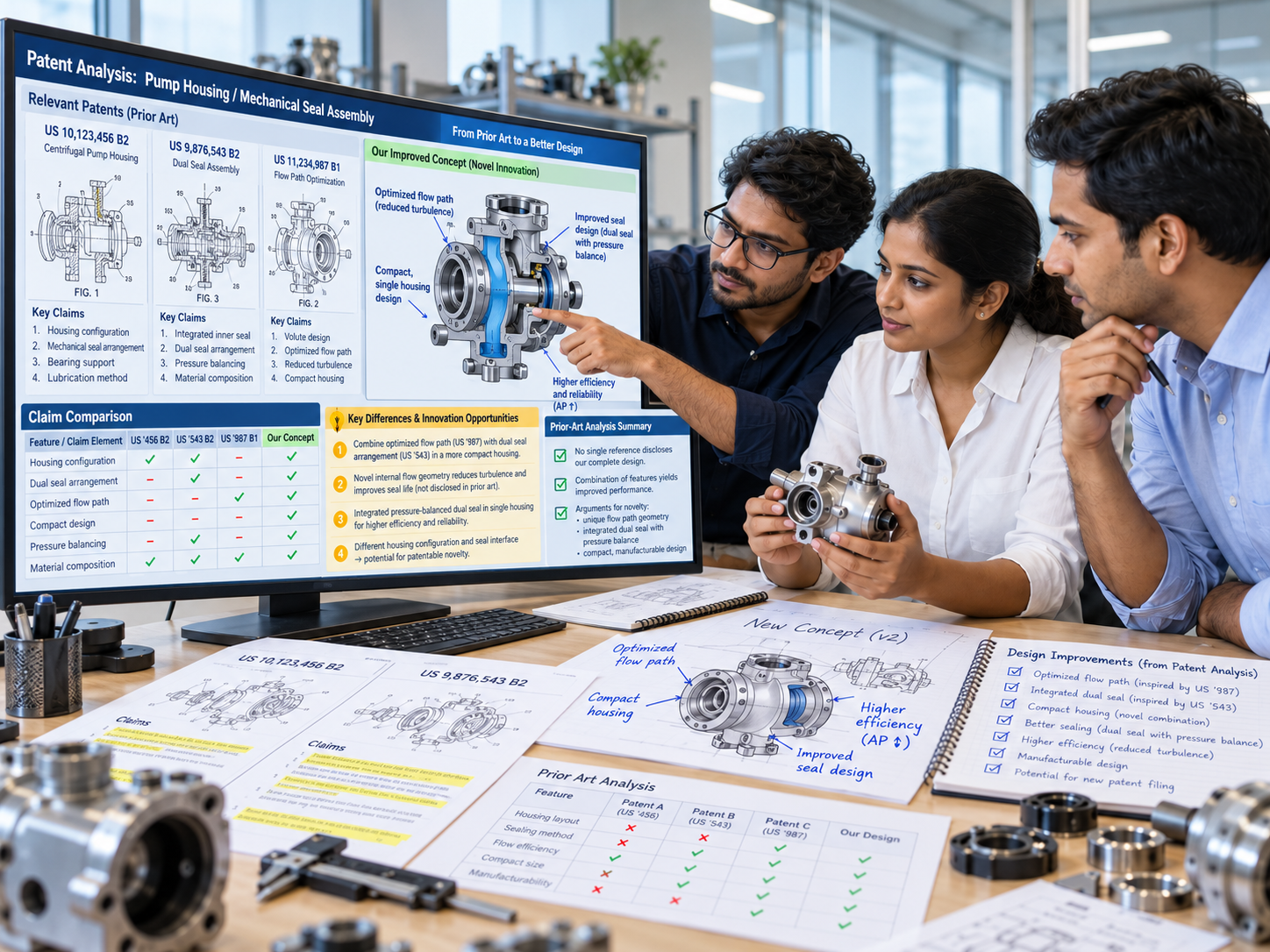
Patents are usually treated as a legal topic. For an R&D team they are also a technical resource.
Every published patent describes a problem someone solved and how they solved it. Together, patents form a free, searchable library of ideas, a record of what competitors are working on, and a way to protect the improvements your own team makes.
Most R&D teams use only a small part of this. Engineers study competitor products without knowing which rights matter. A patent search gets requested when the real question is whether the product can launch. Useful improvements go unrecorded because they do not look like breakthroughs. These workshops are built to close those gaps in one day of hands-on work.
Six ways R&D teams use patents
Avoid reinventing
Search patents before development starts to see what has already been solved and what is still open.
Research and designLearn from expired patents
Once a patent expires, the invention it covered is free to use, and the document stays a detailed technical reference. Other patents may still apply to the same product, so they need checking.
Research and designWatch competitor direction
Patent filings show which technologies competitors are investing in, often before their products reach the market.
PlanCheck the route to launch
Freedom to operate (FTO) asks whether your product could infringe someone else's patent. It is a different question from “is my idea new?”
Before launchProtect what you build
Patents and registered designs can protect functional improvements and product appearance. Improvements to performance, reliability, cost and manufacturability can qualify.
Build and testBuild a steady flow of inventions
A simple idea bank and review process turns everyday problem-solving into documented inventions.
OngoingSuneet B Sabale
Suneet B Sabale is the Founder and CEO of Brainiac IP Solutions. A mechanical engineer, registered Indian Patent Agent and inventor, he works with businesses on patent drafting, FTO, patent analytics and IP strategy. He was named to the IAM Strategy 300 in 2024 and 2025.
View LinkedIn Profile
Program 1: IP for R&D — From Product Ideas to Business Value
Your R&D team solves problems every day. Yet useful improvements may go unreported because they do not look like major inventions. Engineers may study competitor products without knowing which rights matter, request a patentability search when the real concern is freedom to operate, or contribute to filings without understanding how the protection helps the business.
This workshop gives R&D professionals a working understanding of IP at the points where they make product decisions . Participants follow one product case through problem identification, prior art, invention disclosure, FTO questions, redesign and protection choices. They finish by outlining a simple system for reviewing ideas inside their company.
What your team will learn
Find problems worth solving
Identify innovation opportunities in customer complaints, performance gaps, manufacturing difficulties, cost targets and competitor products. Turn a broad concern into a clear problem statement that an R&D team can investigate.
Recognise IP in a product
Distinguish what patents, registered designs, copyright and trade secrets may protect. Understand how functional features, product appearance, technical drawings and confidential manufacturing know-how raise different questions.
Use prior art before making decisions
Understand why prior art searching matters before substantial development or filing work. Use published patent documents to learn what has been disclosed, identify technical alternatives and ask better questions about a proposed improvement.
Recognise and document inventions
Look beyond major breakthroughs to improvements in performance, reliability, cost and manufacturability. Read the claims, description and drawings of a patent; distinguish what the document describes from what it claims. Understand inventor, applicant and company ownership, then prepare a useful invention disclosure.
Know when to raise an FTO concern
Understand why a patentability search does not establish freedom to operate. Learn what the IP team needs to know about the proposed product, its features, and the countries where it will be made or sold.
Learn from existing technology and redesign responsibly
Use published and expired patents as sources of technical knowledge. Understand why the status of one expired patent does not, by itself, clear an entire product: other patents or rights may still be relevant. Explore alternative technical solutions and identify design and copyright questions for separate review.
Understand design protection
Identify when a product’s appearance may warrant design registration. Learn the basic considerations for filing in India and seeking protection in other markets, and why third-party registered designs can affect a product launch even when the technical solution differs.
Support international protection decisions
Understand how sales markets, manufacturing locations, competitors and budgets affect country selection. Learn the broad difference between direct patent filings and the PCT route, and what R&D should document early to support decisions. Consider international design protection separately.
Build a repeatable flow of ideas
Outline an idea bank, submission prompts, a review committee, decision criteria and a basic incentive approach. Connect the process to product and business needs rather than rewarding filing numbers alone.
What participants take back
- A product problem statement and IP rights map
- A prior art and patent-reading worksheet
- An invention disclosure template
- An FTO request template
- Two product redesign concepts with open questions
- A protection and market-selection worksheet
- A draft idea bank and 90-day implementation plan
A one-day workshop gives participants a practical decision framework. The product exercises teach them what to recognise, document and escalate; they do not replace a product-specific FTO assessment or legal opinion.
Program 2: Advanced Patent Drafting — Claims, Prior Art, FTO and AI
Drafting a patent application requires more than describing a product. The drafter must understand the inventive concept, study the relevant prior art, decide what protection to seek and construct claims that are supported by the disclosure.
This workshop uses one supplied product case and prior art set . Participants draft claims, compare alternatives, test their choices and revise their work through guided discussion.
Prior patent drafting experience is required. This is a separate advanced program, not a continuation of the introductory R&D workshop.
What participants will work on
Extract the technical problem, inventive concept, essential features and useful variants from a product disclosure.
Use prior art to test distinctions and decide what further information to request from the inventor.
Construct independent and dependent claims with clear technical relationships.
Review proposed claims for scope, support, clarity and avoidable limitations.
Relate claim choices to the specification, drawings, embodiments and possible product alternatives.
Distinguish claim drafting, which defines the protection sought, from FTO, which examines relevant third-party rights affecting a proposed activity.
Bring the right training to your team
Enquiry
Frequently asked questions
Do our engineers need patent knowledge to attend Program 1?
No prior patent knowledge is required. Program 1 is designed for R&D engineers, product developers and innovation teams. The workshop introduces practical IP concepts through real-world product development exercises.
Will the workshop clear our product for launch?
No. The workshop helps participants understand when to raise Freedom-to-Operate (FTO) concerns. It does not replace a product-specific FTO assessment or legal opinion.
Who from our company should attend Program 1?
Program 1 is suitable for R&D engineers, product developers, technical managers and innovation teams. It is particularly useful for professionals involved in product design, development, improvement and technical decision-making.
Who should attend Program 2?
Program 2 is designed for experienced patent drafters and IP professionals. Prior patent drafting experience is required. The workshop focuses on hands-on claim drafting, prior art, FTO considerations and AI-assisted drafting.
Can you run the workshop at our company?
Yes. Both programs can be conducted as dedicated corporate training sessions. Contact our team to discuss the training requirements, participant numbers, location and available dates.
Can we book both programs?
Yes. The two programs are independent one-day workshops designed for different professional audiences. Your organisation can enquire about scheduling both programs for the relevant teams.
What does it cost?
Training fees are provided on enquiry. Please share your preferred program, location and number of participants. Our team will provide the relevant fee details and available training options.
Can Brainiac help us file after the workshop?
Yes. Brainiac IP Solutions also provides patentability searches, patent drafting, filing, prosecution and IP strategy services. These services can be discussed separately based on your invention and business requirements.